
Mold Removal & Remediation in Sarasota, FL
Describe the mold once, and independent local remediation companies serving Sarasota and Manatee counties can reply with free quotes. This page explains what careful mold removal involves, what it tends to cost, and what Florida law says to check before you sign.
Get a Free Quote Call (941) 393-1454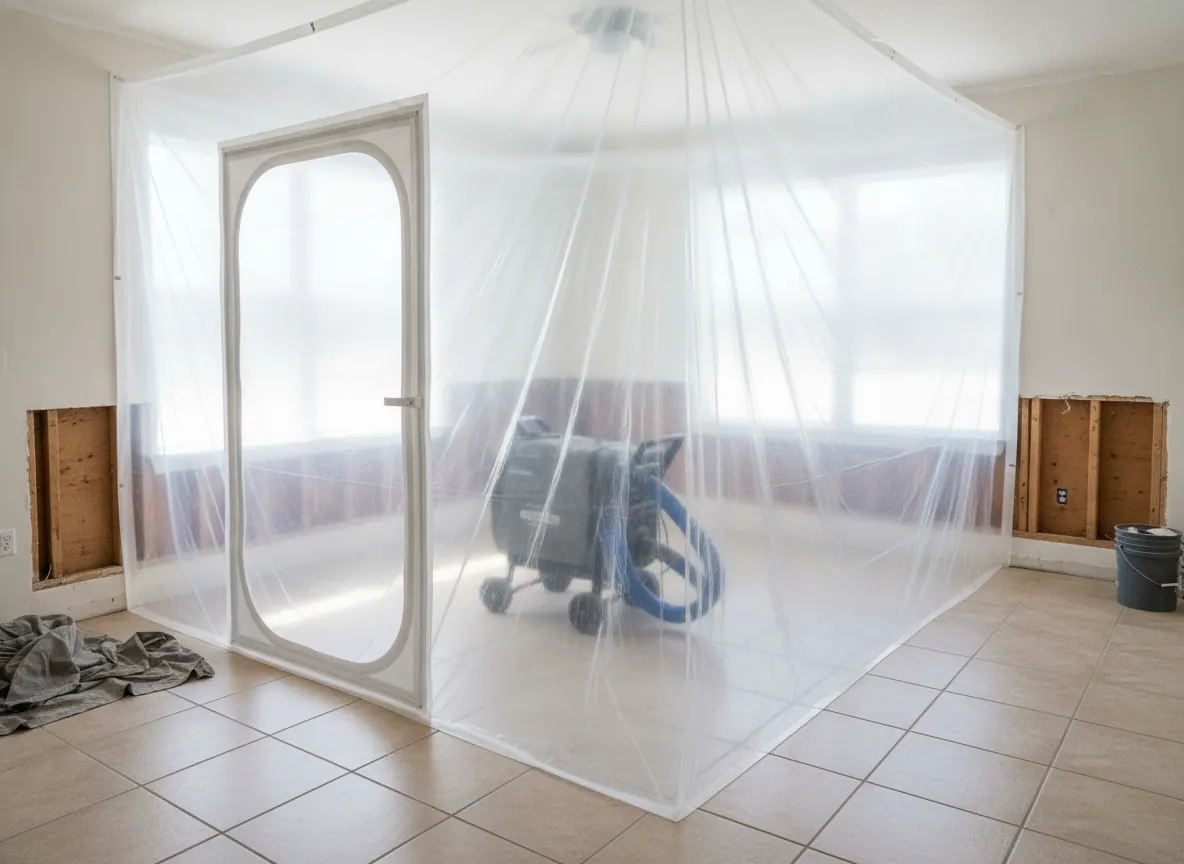
Signs the mold needs more than a sponge
Mold needs three things: moisture, something to feed on, and time. A Sarasota home has plenty of the first two. The real question is where the water is coming from.
- A musty smell that comes back after you clean or air out a room
- Spots that return in the same place on a wall, ceiling, closet or baseboard
- Stains, bubbling paint or soft drywall near a window, tub, sink or AC closet
- A leak, roof problem or wet floor that took more than a day or two to dry
Common sources here are roof leaks after storms, plumbing leaks under sinks and behind appliances, air handlers and condensate lines, bathrooms without a working fan, and homes closed up for the summer. If you smell mold but can't see it, start with mold inspection and testing.
What a licensed remediator typically does
Methods vary by company and job. A careful written quote usually covers these steps, in this order.
Find and stop the water
Moisture readings trace the source: roof, plumbing, AC, window or storm water. The repair may need a roofer or plumber. If the water isn't fixed, the mold usually returns.
Set up containment
Plastic sheeting seals the work area, often with a zip door. A HEPA air scrubber keeps air moving out of the space so spores stay inside the work zone.
Remove what can't be cleaned
Moldy drywall, insulation, carpet pad and ceiling tile are cut out, bagged inside containment and carried out.
Clean and dry what stays
Studs, block and subfloor are HEPA vacuumed and cleaned. Dehumidifiers and air movers run until readings show the material is dry.
Document the work
You get written records of what was found and done. If you want a clearance test, a separate assessor does it before walls are closed.
Rebuilding (new drywall, paint, flooring) is often a separate contract. The full sequence, including the optional independent assessment, is on the process page.
Florida license check
Florida licenses mold assessors and mold remediators through the Department of Business and Professional Regulation (DBPR) under Chapter 468, Part XVI. Before you hire, look up the company's license at myfloridalicense.com (search by name or license number). Some contractors are exempt when they work within their own license; ask which license covers the work.
Florida's mold-licensing law covers mold growth over 10 square feet (s. 468.8411). For smaller areas, EPA says you can usually clean it yourself. Homeowners may also work on their own home (s. 468.841).
In Florida, a company that does the mold assessment generally can't also do the remediation on the same structure within 12 months, and vice versa (s. 468.8419). Sarasota Mold Experts may connect you with both kinds of company, but they are separate businesses. Step-by-step help is in the Florida mold license lookup guide.
Mold removal in Sarasota: what is different here
Start with the weather. Sarasota Bradenton International Airport averages about 49 inches of rain a year, and about 60% of it falls from June through September. August is the wettest month, at about 9.1 inches (NOAA 1991–2020 normals). Summer dew points in the Tampa Bay area average about 72–74°F. That means a house stays dry mostly because the AC runs. EPA suggests keeping indoor humidity below 60%, ideally 30–50%.
Housing age matters too. The median home in the City of Sarasota was built in 1976, and about 58% of homes there were built before 1980 (American Community Survey 2020–2024). Older roofs, plumbing and windows give water more ways in. Many people also live in condos, where a leak often starts in another unit or a shared pipe. See condo mold for who usually handles what.
Then there are storms. Hurricane Debby dropped 16.98 inches of rain at a Sarasota gauge in August 2024, the highest total in the state. Helene's surge reached Longboat Key in late September 2024, and Hurricane Milton made landfall on Siesta Key on October 9, 2024. Mold from wet walls can show up weeks or months later. If water came in from a storm, read mold after a hurricane or flood.
A home closed up for the summer with the AC off or set high can also come back musty; check the AC and air handler first.
The same independent companies often quote across Bradenton, Lakewood Ranch, Venice, North Port and Siesta Key, plus the other service areas.
Where the mold is changes the job: attic, AC and ductwork, dark or "black" mold on drywall, or a rental home.
What mold removal costs
Size, location, material removed and drying time drive the price. Testing and rebuilding are usually separate.
| Item | Typical range | Source |
|---|---|---|
| Mold remediation, typical job | $1,500–$9,000 (avg ≈ $3,500) · $1,200–$3,750 (avg ≈ $2,300) | Fixr, Aug 2025 · This Old House, Mar 2026 |
| Per square foot | $10–$30 · $10–$25 | Fixr, Aug 2025 · This Old House, Mar 2026 |
| Walls | $1,000–$12,000 | Fixr, Aug 2025 |
| Whole house | $10,000–$30,000 | Fixr, Aug 2025 |
For a range based on your square footage, use the mold remediation cost calculator. Prices come from the independent companies, not from this site. Insurance questions are in the FAQ below.
Health: what the EPA and CDC say
The EPA and CDC describe the main health effects of indoor mold as allergic and irritant reactions. People with asthma, allergies or a weakened immune system may be more sensitive. If anyone in the home has symptoms, see a doctor.
When to call a company, and when DIY is fine
Florida's mold-licensing law covers mold growth over 10 square feet (s. 468.8411). For smaller areas, EPA says you can usually clean it yourself. Homeowners may also work on their own home (s. 468.841).
Get quotes instead when:
- The growth covers more than about 10 square feet, or keeps coming back
- It is inside a wall, in the attic, or in the air handler or ducts
- The water came from a flood, storm surge, sewer backup or long-running leak
- Someone in the home has asthma, allergies or a weakened immune system
- You rent or own a condo and the cause is a roof, pipe or building problem. Tell the landlord or association in writing first.
Questions to ask every company
- What is your DBPR license number? (Look it up at myfloridalicense.com before you sign.)
- Will you give me a written contract (s. 468.8422) with the scope, steps and total price?
- Can you send proof of insurance? Florida requires remediators to carry at least $1,000,000 in general liability with mold coverage (s. 468.8421).
- Will I get a written remediation plan before work starts, and written records after?
- What is the water source, and who is fixing it?
- If I want a clearance test, will an independent assessor from a separate company do it?
Mold removal questions
Is mold removal the same as mold remediation?
Most people use the words the same way. Florida law describes mold remediation as the removal, cleaning, sanitizing, demolition or other treatment of mold growth over 10 square feet (s. 468.8411). In practice, a full job means finding the water, containing the area, removing what can't be cleaned, drying what stays and documenting it. Ask each company to list those steps in its written quote.
Does a mold removal company in Florida need a license?
For mold growth over 10 square feet, Florida generally requires a mold remediator license from DBPR under Chapter 468, Part XVI. Some contractors are exempt when they work within their own license, so ask which license covers the job. Look up any company at myfloridalicense.com by name or license number before you sign anything.
Can the same company test for mold and remove it?
Generally not on the same home. In Florida, a company that does the mold assessment generally can't also do the remediation on the same structure within 12 months, and vice versa (s. 468.8419). If you want testing before or after the work, plan on two separate companies. That keeps the test independent from the job being sold.
Can I remove the mold myself?
Often, for small areas. EPA says homeowners can usually clean a moldy area of less than about 10 square feet themselves, and Florida lets homeowners work on their own home (s. 468.841). Larger patches, growth inside walls or the AC system, anything after a flood, or someone in the home with asthma or a weakened immune system are good reasons to get quotes.
Will my homeowners insurance pay for mold removal?
It depends on your policy. Many Florida homeowners policies limit mold coverage, often to $10,000, and it usually depends on what caused the water. Flood damage goes to a flood policy. Check your declarations page and call your insurer before signing a remediation contract.
Get mold removal quotes in Sarasota
Describe where the mold is, roughly how big the area is, what got wet and whether you own, rent or live in a condo. Photos can come later.
Your request goes to independent local companies, which may pay to receive requests. Sarasota Mold Experts does not inspect, test or remove mold. Describe your situation any time; companies reply on their own schedules. No obligation. Prefer to talk? Call (941) 393-1454
Found mold or a musty smell? Get free quotes.
Describe it once and independent mold companies serving Sarasota and Manatee counties can reply with no-obligation quotes.