
Florida Mold License Lookup: How to Check a Mold Company in Sarasota
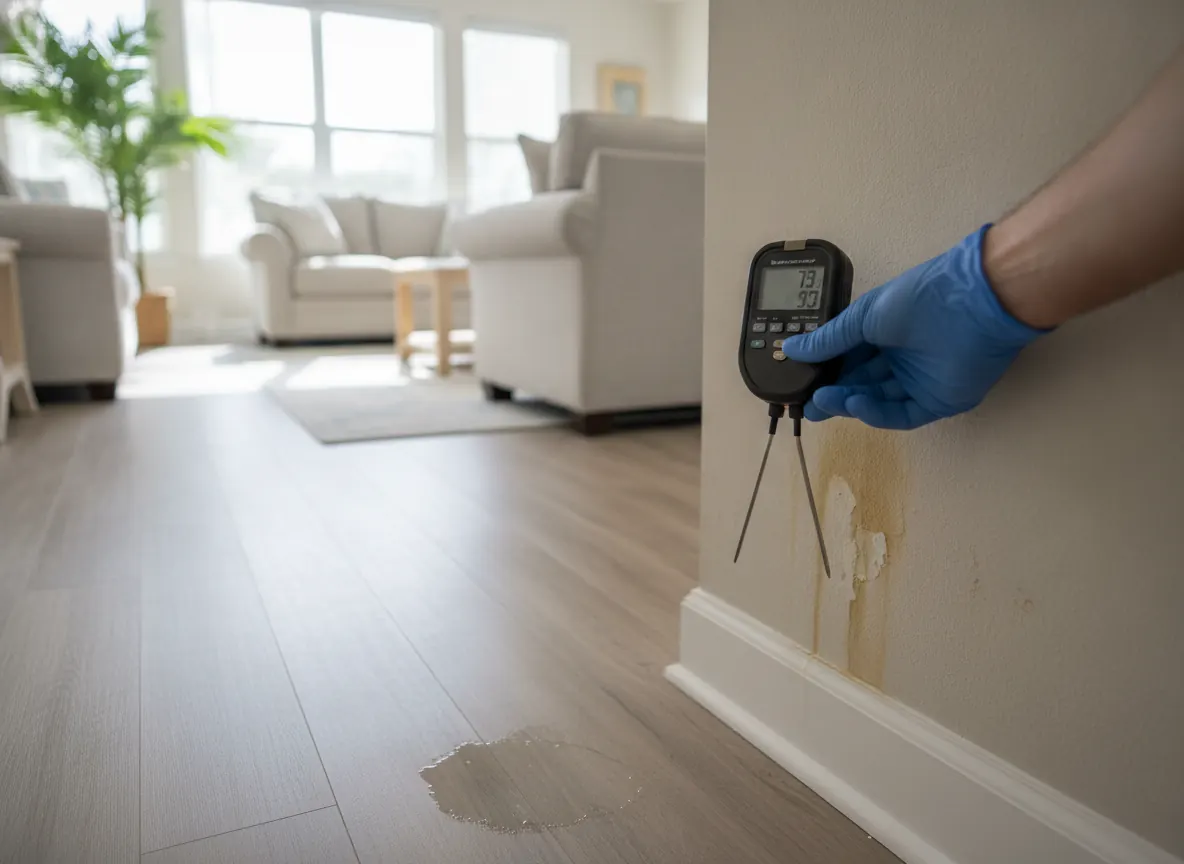
If you found mold in your Sarasota home and you are comparing companies, check the license before you compare prices. Florida licenses mold work at the state level, the records are public, and the lookup takes a few minutes on a phone.
The short version. Florida licenses mold assessors and mold remediators through the Department of Business and Professional Regulation (DBPR) under Chapter 468, Part XVI. Before you hire, look up the company's license at myfloridalicense.com (search by name or license number).
Does Florida require a license for mold remediation?
For most jobs you would hire out, yes. Florida's law sets the line in its definitions. A "mold assessment" is sampling and evaluation to find the origin, identity, location and extent of mold growth "of greater than 10 square feet." "Mold remediation" is "the removal, cleaning, sanitizing, demolition, or other treatment" of mold growth of more than 10 square feet that was not purposely grown there (s. 468.8411).
Put simply: Florida's mold-licensing law covers mold growth over 10 square feet (s. 468.8411). For smaller areas, EPA says you can usually clean it yourself. Homeowners may also work on their own home (s. 468.841). The 10 square foot line is part of how the law defines the work, not a loophole, so do not treat a company's "it's under 10 feet" as a reason to skip checking its credentials on a bigger job.
The law also protects the titles. Only people who comply with Part XVI may call themselves a "certified," "registered" or "licensed" mold assessor or mold remediator (s. 468.8419). Doing licensed mold work without complying is a crime: a second-degree misdemeanor the first time, a first-degree misdemeanor the second time, and a third-degree felony after that.
Mold assessor vs. mold remediator: what each one does
Florida issues two separate licenses. One company finds and measures the problem. The other removes it.
| Mold assessor | Mold remediator | |
|---|---|---|
| What they do | Performs or directly supervises a mold assessment: inspection, sampling and evaluation (s. 468.8411) | Removes, cleans, sanitizes, demolishes or otherwise treats mold, including steps to prevent regrowth (s. 468.8411) |
| Insurance the law requires | General liability and errors and omissions coverage of at least $1 million (s. 468.8421) | General liability of at least $1,000,000 that includes specific coverage for mold-related claims (s. 468.8421) |
| Experience to sit for the exam | A related degree with 30 semester hours in science plus 1 year of sampling or investigation work, or a high school diploma plus 4 years (s. 468.8413) | A related degree with 30 semester hours in science plus 1 year of remediation work, or a high school diploma plus 4 years (s. 468.8413) |
| Training | Documented training in water, mold and respiratory protection (s. 468.8414) | |
| Renewal | Every even-numbered year by July 31, with 14 hours of continuing education (DBPR FAQ) | |
The mold inspection and testing page explains when an assessment is worth paying for. The mold removal page walks through what a remediation job usually involves.
The 12-month rule: why testing and removal are usually two companies
In Florida, a company that does the mold assessment generally can't also do the remediation on the same structure within 12 months, and vice versa (s. 468.8419). The statute is specific. An assessor may not "perform or offer to perform any mold remediation to a structure on which the mold assessor or the mold assessor's company provided a mold assessment within the last 12 months." The same bar runs the other way for remediators.
The point is to keep the person measuring the problem from profiting by making it bigger. It also means the company that checks the work afterward, if you want a clearance test, is independent of the company that did it.
The one exception. The 12-month bar "does not apply to a certified contractor who is classified in s. 489.105(3) as a Division I contractor." That refers to certain state-certified construction contractors under Chapter 489. The statute also lets DBPR rules require such a contractor to tell you that you have the right to ask for competing bids. If a company offers to both test and remove your mold and points to this exception, ask for its Chapter 489 certification number and look that up too.
A related rule: an assessor or remediator may not inspect or remediate for a fee on a property in which the licensee or the company has a financial or transfer interest (s. 468.8419).
Who doesn't need a Florida mold license
The exemptions are in s. 468.841. In plain terms, these people may do mold work without a mold license:
- Homeowners working on their own residential property.
- Owners and lessees, including an employer or affiliated business, working on property they own or lease, as long as they are not in the business of doing mold work for the public.
- Employees of a licensed assessor or remediator while directly supervised by that licensee.
- Some other licensees acting within their own license, including construction contractors (Chapter 489) and pest control operators (Chapter 482). The remediation list also covers home inspectors, and both lists include certain insurance representatives and manufactured-housing licensees. The exemption is lost if the person holds out for hire as a mold assessor or remediator.
- Government employees working in that role who do not hold out for hire to the public.
Some contractors are exempt; ask which license covers the work. A roofer or general contractor drying out and rebuilding after a leak may be working under a Chapter 489 license rather than a mold license. That can be legitimate. You still want the license number, and you want it to match the work.
How to look up a mold license on MyFloridaLicense.com
Get the name and number in writing
Ask for the exact business name, the license holder's name and the DBPR license number before anyone opens a wall.
Search the DBPR site
Go to myfloridalicense.com and open the license search. You can search by name, license number, city or county, or license type. Search by number first, then by name.
Check the record
Confirm the license type (assessor or remediator) fits the job, the status is current, and the name matches the one on your contract.
Confirm the insurance
Ask for a certificate. DBPR says each assessor or remediator needs their own coverage or must be named on the company's policy.
Read the contract
Florida requires the contract to be a document or electronic record signed or otherwise authenticated by the parties (s. 468.8422). An assessment contract does not have to include repair-cost estimates.
Sarasota County's Building Official gave similar advice after the 2024 storms: check whether a company is properly licensed and insured, and whether any consumer complaints are on file, at MyFloridaLicense.com.
What to ask any mold company before you sign
- The DBPR license number, and which license (assessor or remediator) covers this job
- A written contract (s. 468.8422)
- Proof of insurance (the law requires $1,000,000 general liability, s. 468.8421)
- A written assessment or remediation plan that says what will be removed, how the area will be contained, and how it will be dried
- A clearance test by an independent assessor, if you want one
Prices vary by size, location and how much material has to come out. The Sarasota mold remediation cost guide lists published national ranges so you can tell whether a quote is in the usual band.
Red flags
Be careful with a "licensed" claim that comes with no number, a number that belongs to a different business name, an assessor who offers to do the removal too (unless the Division I exception truly applies), a request to pay the full amount upfront, and door-knockers after a storm. Sarasota County's Building Official advised reporting scams at 866-966-7226, and DBPR lists its unlicensed activity hotline as 1.866.532.1440. For more after a hurricane, see storm contractor scams in Florida.
About this site. Sarasota Mold Experts is a free quote service, not a mold company. You describe the problem once, and independent local companies, which may pay to receive requests, can reply with quotes. Companies reply on their own schedules. Check each company's license at myfloridalicense.com before you sign anything.
Frequently asked questions
Can the same company test for mold and remove it in Florida?
Generally no. Under s. 468.8419, an assessor may not remediate a structure it assessed in the last 12 months, and a remediator may not assess a structure it remediated in the last 12 months. The exception is a state-certified Division I contractor under s. 489.105(3). Ask for that certification number and verify it.
Do I need a licensed company for a small patch of mold?
Florida's mold-licensing law covers mold growth over 10 square feet (s. 468.8411). For smaller areas, EPA says you can usually clean it yourself, as long as you fix the moisture that caused it. Homeowners may also do mold work on their own home of any size (s. 468.841).
How do I check a mold license in Florida?
Go to myfloridalicense.com and use the license search. You can search by name, license number, city or county, or license type. Confirm the license type fits the job, the status is current, and the name matches your contract.
Does a general contractor need a mold license?
Not always. Florida exempts people licensed under certain other chapters, including Chapter 489 construction contractors, when they act within their own license and do not hold out for hire as mold assessors or remediators (s. 468.841). Ask which license covers the work and look it up.