
Condo Mold in Sarasota: Who Handles What
Mold in a condo raises two questions: how to fix it, and who is responsible. Independent local mold companies serving Sarasota and Manatee counties can reply with free quotes. This page explains how Florida condo law usually splits the job between the association and the owner, and what to do first.
Get a Free Quote Call (941) 393-1454Not legal advice. This page summarizes Florida statutes in plain language. Your declaration of condominium and your insurance policies control the details. For a dispute, talk to a Florida attorney.
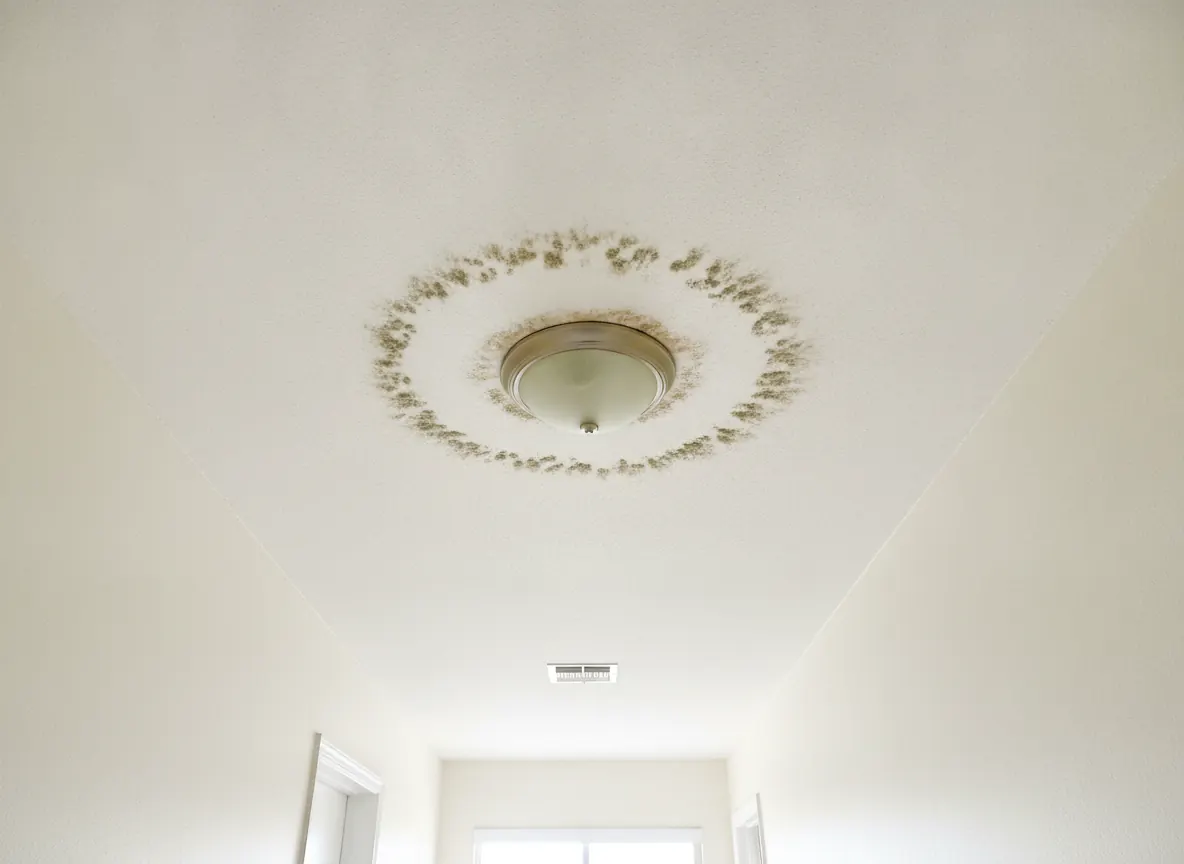
Where condo mold usually starts
In a condo, the water often comes from somewhere you don't control. Watch for:
- Stains on a ceiling under another unit, a roof or a balcony
- Spots in closets or behind furniture on outside walls
- A musty AC closet, wet drain pan or dripping condensate line
- Soft drywall or swollen cabinets near a shared pipe wall
- A musty smell when you return after weeks or months away
Condos are common here. About 45.9% of housing units on Longboat Key and 45.3% on Siesta Key are in buildings with 20 or more units, and 28.8% in the City of Sarasota (American Community Survey 2020–2024). On Siesta Key, about 66% of homes were built before 1980. Older buildings, shared plumbing and units that sit closed for the summer all add up.
Association or owner: what Florida law says
Chapter 718 of the Florida Statutes sets the starting point. In plain terms:
| Topic | General rule | Statute |
|---|---|---|
| Common elements (roof, exterior walls, shared areas) | Maintenance is the association's responsibility, except limited common elements the declaration assigns to owners | s. 718.113(1) |
| Association's insurance | Excludes unit finishes such as floor, wall and ceiling coverings, cabinets, countertops, appliances and water heaters | s. 718.111(11)(f) |
| Owner's insurance | Owners insure and pay to rebuild the parts the association's policy excludes | s. 718.111(11)(g) |
| After an insurable event | The association generally repairs, unless an owner's negligence or failure to follow the declaration caused the damage | s. 718.111(11)(j) |
So mold from a roof leak may involve the association's repair duty and your policy for finishes, while mold from your own AC drain line may be yours. Read your declaration and talk to your manager in writing.
More detail, with examples, is in condo mold: who is responsible in Florida. If you rent a condo, your landlord is your first contact; see mold in rentals.
What to do when you find mold in your condo
In this order, where you can.
Document
Take dated photos and video of the mold, any stain, and the likely source, such as a ceiling, pipe wall or AC closet.
Notify in writing
Email or write to the manager and board, and the neighbor if their unit may be the source. Keep copies.
Call your insurer
Check your unit-owner policy for mold limits before you sign a contract.
Get quotes
Ask licensed companies for written quotes, and an independent assessment if the source or extent is disputed.
Many associations set rules for contractors, such as notice, work hours and insurance certificates. Ask the manager first.
Condo mold in Sarasota: seasonal units and storms
Many Sarasota-area condos sit empty for part of the year. On Longboat Key, 48.8% of housing units were for seasonal, recreational or occasional use in 2020 (Census 2020). A closed unit with the AC off or set high can get humid fast. EPA suggests keeping indoor humidity below 60%, ideally 30–50%. See how to prevent mold in a closed-up home and AC and HVAC mold.
Helene's surge reached Longboat Key in September 2024, and Milton made landfall on Siesta Key on October 9, 2024. When a building takes water, building repairs and unit repairs often move on different schedules. See mold after a hurricane or flood, and the Siesta Key and Longboat Key pages.
Many Florida policies limit mold coverage, often to $10,000, a limit that became standard after state-approved endorsements in 2002 and 2003. Check your declarations page and call your insurer before you sign a contract.
What condo mold removal costs
Access rules and shared walls can add time to condo jobs.
| Item | Typical range | Source |
|---|---|---|
| Mold remediation, typical job | $1,500–$9,000 (avg ≈ $3,500) · $1,200–$3,750 (avg ≈ $2,300) | Fixr, Aug 2025 · This Old House, Mar 2026 |
| Per square foot | $10–$30 · $10–$25 | Fixr, Aug 2025 · This Old House, Mar 2026 |
| Bathroom | $500–$1,500 | Fixr, Aug 2025 |
| HVAC / ducts | $3,000–$10,000 | Fixr, Aug 2025 |
Use the mold remediation cost calculator for a planning range. Prices come from the independent companies, not from this site.
Florida license check
Florida licenses mold assessors and mold remediators through the Department of Business and Professional Regulation (DBPR) under Chapter 468, Part XVI. Before you hire, look up the company's license at myfloridalicense.com (search by name or license number). In Florida, a company that does the mold assessment generally can't also do the remediation on the same structure within 12 months, and vice versa (s. 468.8419).
Health: what the EPA and CDC say
The EPA and CDC describe the main health effects of indoor mold as allergic and irritant reactions. People with asthma, allergies or a weakened immune system may be more sensitive. If anyone in the home has symptoms, see a doctor.
When DIY is fine in a condo
For a small spot, such as a few square inches of mold on a bathroom ceiling, cleaning it yourself is usually fine. EPA says homeowners can usually handle areas under about 10 square feet. If the source is a shared pipe, the roof or another unit, report it in writing anyway, because the mold will return until the water is fixed.
Questions to ask every company
- What is your DBPR license number? (Look it up at myfloridalicense.com.)
- Will you give me a written contract (s. 468.8422) with the scope and total price?
- Can you send proof of insurance, including a certificate my association can keep on file? Florida requires remediators to carry at least $1,000,000 in general liability (s. 468.8421).
- Will I get a written remediation plan to share with the association and insurer?
- How will you keep dust out of the hallway and other units?
- If I want a clearance test, will an independent assessor from a separate company do it?
For the full job, see mold removal and remediation and mold inspection and testing.
Condo mold questions
Who is responsible for mold in a Florida condo?
It usually depends on where the water came from and what got damaged. Florida law puts common elements on the association (s. 718.113(1)), while unit finishes such as wall and floor coverings, cabinets and appliances are left to owners to insure (s. 718.111(11)). Your declaration can change the details. Read it, and ask your manager in writing. This is not legal advice.
Mold in my unit came from a neighbor's leak. Who pays?
Often it starts as an insurance question. After an insurable event, the association generally repairs the property it must insure, while owners cover their unit finishes, and an owner whose negligence caused the damage may owe the uninsured cost (s. 718.111(11)(j)). Document the leak with dated photos, notify the association and the neighbor in writing, and call your unit-owner insurer.
The association isn't responding. What can I do?
Keep it in writing. Send a dated email or letter to the manager and board with photos, where the water is coming from and what you are asking for. Keep copies of every reply. If mold is spreading in your unit, you can still get your own quotes and an independent assessment. For a dispute that stalls, talk to a Florida attorney.
Can I hire my own mold company for my condo unit?
Usually yes for work inside your unit, but check your declaration and rules first. Many associations require notice, set work hours and ask contractors for a certificate of insurance. Look up the company's license at myfloridalicense.com, get a written contract, and tell the manager in writing before work starts, especially if walls shared with other units will be opened.
Get condo mold quotes in Sarasota
Describe where the mold is, where you think the water came from (your unit, a neighbor, the roof or a shared pipe), and the building and area. Photos can come later.
Your request goes to independent local companies, which may pay to receive requests. Sarasota Mold Experts does not inspect, test or remove mold. Describe your situation any time; companies reply on their own schedules. No obligation. Prefer to talk? Call (941) 393-1454
Found mold or a musty smell? Get free quotes.
Describe it once and independent mold companies serving Sarasota and Manatee counties can reply with no-obligation quotes.