
How Mold Remediation Works in Sarasota, FL
A careful mold job follows the same path whether it is a bathroom ceiling in a Siesta Key condo or a flooded block home in North Port. Here are the eight steps, where Florida rules come in, and what to ask at each one.
Get a Free Quote Call (941) 393-1454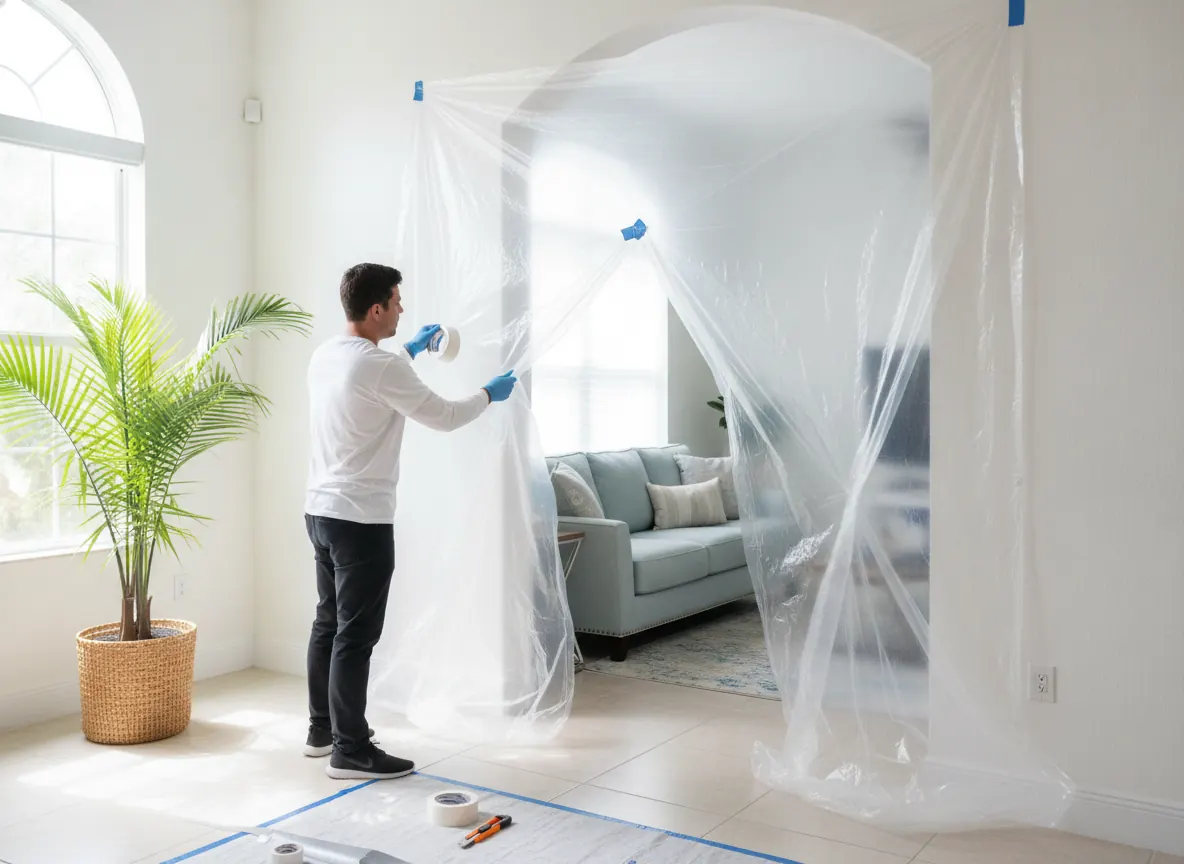
The short version
Find the water. Contain the area. Remove what is moldy and clean what can be cleaned. Dry it and fix the source. Check the result before the walls go back up.
Sarasota Mold Experts is a free quote service and does none of this work. The steps below describe what independent mold companies in Sarasota and Manatee counties typically do, so you can read their quotes with a clear picture of the job.
Florida's mold-licensing law covers mold growth over 10 square feet (s. 468.8411). For smaller areas, EPA says you can usually clean it yourself. Homeowners may also work on their own home (s. 468.841).
The eight steps of a mold job
Describe the problem
Use the free quote form or call. Say where the mold is, roughly how big it looks, what got wet and when, and whether you own a house, own a condo or rent. Describe your situation any time; companies reply on their own schedules.
Companies reply
Independent mold inspection and remediation companies that work in Sarasota and Manatee counties contact you to ask questions, look at the problem and quote it. Companies may pay to receive requests, and you never have to hire any of them.
Optional independent assessment
For hidden mold, a home purchase, a dispute or a large storm job, you can hire a mold assessor first to find the moisture and map the mold. Check the assessor's DBPR license. When mold is visible, the EPA says sampling is usually unnecessary.
Written remediation plan and contract
Get a written plan listing the rooms, containment, what will be removed, drying and any clearance test. Florida requires a signed written contract (s. 468.8422). Ask for the DBPR license number and proof of the required $1,000,000 general liability insurance.
Containment and removal
The work area is sealed with plastic sheeting, vents are covered, and HEPA air scrubbers help keep spores from drifting. Moldy drywall, insulation and carpet are cut out and bagged. Concrete block, framing and other hard surfaces are HEPA vacuumed and cleaned. Painting over mold is not a fix.
Drying and fixing the source
Dehumidifiers and air movers run until moisture readings are back to normal. The water source has to be fixed too: the roof, a plumbing leak, a clogged AC condensate line or a window. Otherwise the mold comes back.
Optional clearance test
Before walls are closed, an independent assessor from a separate company can check the area visually, with a moisture meter and sometimes with air or surface samples. In Florida, the company that remediated generally can't do this assessment within 12 months.
Written records
Keep the contract, the plan, photos, invoices and any test results together. They help with insurance, a future sale or a condo association. Rebuild comes next and may need a permit.
Where Florida rules come in
Florida licenses mold assessors and mold remediators through the Department of Business and Professional Regulation (DBPR) under Chapter 468, Part XVI. Before you hire, look up the company's license at myfloridalicense.com (search by name or license number). Not every company that replies will hold that license, so check each one. Some contractors are exempt when they work within their own license; ask which license covers the work.
In Florida, a company that does the mold assessment generally can't also do the remediation on the same structure within 12 months, and vice versa (s. 468.8419). That is why steps 3 and 7 use a separate company from the one doing the removal. If your mold is visible and you don't need records for a sale or dispute, you may skip both.
What to ask for before work starts
- The DBPR license number, then look it up yourself at myfloridalicense.com.
- A written contract, signed by both sides before work starts (s. 468.8422).
- Proof of insurance. Florida law requires a mold remediator to carry at least $1,000,000 in general liability coverage (s. 468.8421).
- A written assessment or remediation plan that lists the rooms, containment, what will be removed and how drying will be checked.
- A clearance test by an independent assessor, if you want one, from a different company than the remediator.
Mold cleanup itself usually isn't permitted work, but rebuilding often is. In unincorporated Sarasota County, removing drywall doesn't need a permit, but replacing drywall more than 2 feet above the floor does (Building Official letter, October 2024). In Manatee County, drywall repair outside a flood zone generally needs no permit; in a flood zone, repairs need a permit and a substantial-damage review. The City of Sarasota requires permits for most work. Your rebuild contractor should confirm and pull any permit. In other cities, check with the city building department.
After a storm: protect yourself on the contract
After the 2024 hurricanes, the Sarasota County Building Official's letter of October 22, 2024, gave homeowners the same basic advice. It still applies.
- Verify the license at MyFloridaLicense.com before any signature or payment, and check for complaints.
- Get a written contract that lists the work and the price.
- Never pay the full amount upfront. Tie payments to work that is done.
- Be wary of door-knockers and unsolicited offers you didn't ask for.
- Report suspected scams at 866-966-7226, the number given in that letter.
Next: see what each step typically costs, read about mold inspection and testing, or go to mold removal. After flooding, start with mold after hurricanes and floods. Condo owners can read condo mold first.
Start with step one
Describe the problem once, and independent companies that work in Sarasota, FL and nearby towns can reply with quotes. No cost and no obligation.
Found mold or a musty smell? Get free quotes.
Describe it once and independent mold companies serving Sarasota and Manatee counties can reply with no-obligation quotes.