
Do You Need Mold Testing? When It Is Worth It in Sarasota
When people find mold, one of the first questions is whether to test it. The honest answer is that many homes don't need testing, and some really do. This guide explains when mold testing in Sarasota, FL tends to be worth the money, the difference between air and surface samples, what a clearance test is, and the Florida rule that keeps testing and removal in separate hands.
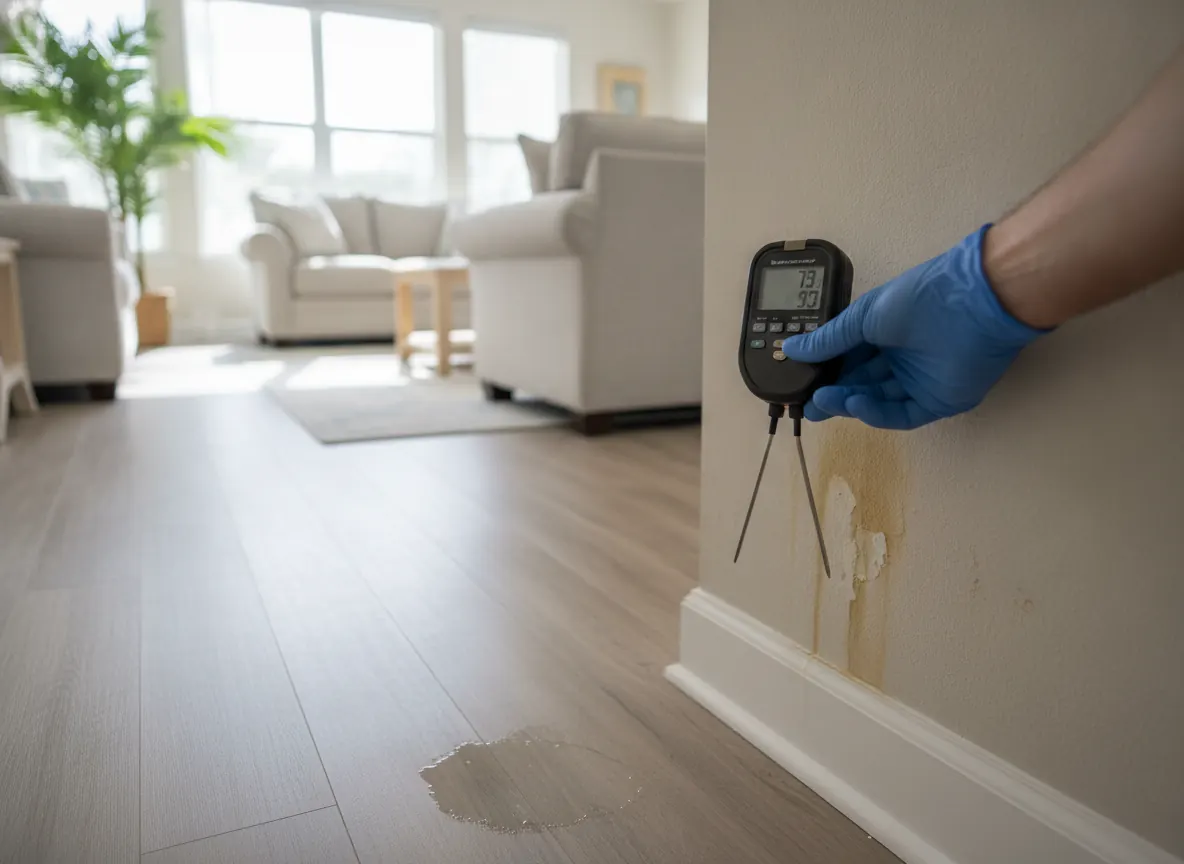
What EPA says about mold testing
EPA's guidance is direct: "In most cases, if visible mold growth is present, sampling is unnecessary." If you can see mold, you already know you have it. The next steps are to find the moisture source, fix it, and remove the mold the right way. A lab report naming the type of mold usually doesn't change that plan, because the removal approach is much the same whatever the color or species.
Testing is optional. It is most useful when it answers a question you can't answer by looking.
When testing is worth it
- Hidden mold. A musty smell with no visible growth, or a room that smells worse when the AC runs. An assessor can use moisture readings and samples to narrow down where to look.
- Disputes. A disagreement with a landlord, a condo association, a seller or an insurer, where a written, independent record helps.
- Buying a home. Signs of past water damage, storm repairs or a long closed-up period. See the post on mold inspections when buying a home.
- Clearance after remediation. Confirming the work area is clean before walls are closed up and finishes go back in.
When you can probably skip it
- The mold is visible and the cause is obvious, such as a known leak under a sink.
- The area is small. Florida's mold-licensing law covers mold growth over 10 square feet (s. 468.8411). For smaller areas, EPA says you can usually clean it yourself. Homeowners may also work on their own home (s. 468.841).
- You want to know whether it is "black mold." Color doesn't tell you the risk, and EPA and CDC advise removing mold whatever its type.
Air samples vs surface samples
Mold sampling usually falls into two groups. An assessor decides which to use based on the question being asked.
| Type | How it works | Best for | Limits |
|---|---|---|---|
| Air sample | A pump draws a measured amount of air through a collection cassette; a lab counts spores | Hidden mold, comparing rooms, clearance after work | A snapshot of one moment; results can shift with weather, activity and AC use |
| Surface sample (tape or swab) | Tape or a swab lifts material from a visible spot for lab analysis | Confirming whether a stain or residue is mold | Tells you about that one spot, not the whole room |
Assessors often take an outdoor air sample at the same visit, so indoor results can be compared with the air outside. Ask how many samples are planned, where they will be taken, and which lab analyzes them.
What a Florida mold assessment covers
Florida law defines a mold assessment as a process performed by a mold assessor that includes physical sampling and the evaluation of data to identify the origin, identity, location and extent of mold growth over 10 square feet (s. 468.8411). In plain terms, a good assessment should help you answer: where is the mold, how much is there, and what is feeding it?
Expect a written report with the sample locations and lab results, observations about moisture and visible growth, and recommendations. Florida's contract rule says mold contracts must be in writing and signed by the parties, and an assessment contract doesn't have to include repair-cost estimates (s. 468.8422). That is one reason remediation quotes usually come separately.
The separate-company rule. In Florida, a company that does the mold assessment generally can't also do the remediation on the same structure within 12 months, and vice versa (s. 468.8419). The same law bars an assessor from accepting payment from a remediator for referring business, and the reverse. The point is to keep the company that measures the problem separate from the company paid to fix it. If one company offers to test your home and then remove the mold it finds, ask how that fits this rule.
What is a clearance test?
A clearance test, sometimes called post-remediation verification, happens after the remediation company finishes and before rebuilding. An independent assessor typically looks over the work area, checks that materials are dry, and may take air or surface samples. If the area doesn't pass, the remediator may need to clean again before walls and finishes go back.
Clearance testing is optional, but it is common on larger jobs, after storm flooding, and when you want a written record for an insurer, buyer or association. Agree on it before work starts: ask the remediation company whether its contract assumes a clearance test, and hire the assessor yourself so the result is independent. The mold removal page explains where clearance fits in a typical job.
What mold testing costs
| Item | Typical range |
|---|---|
| Mold inspection / testing | $450–$800 (avg ≈ $500) |
| Inspection only | $300–$600 |
| Air test | $500–$700 |
| Surface (tape or swab) test | $150–$200 |
| Each extra sample | $60–$80 |
The size of the home, the number of samples and whether anything has to be opened up all move the price. The mold remediation cost page shows how testing and clearance fit into a full job, and the mold inspection and testing page covers mold testing in Sarasota, FL in more detail.
How to check a mold assessor
- Ask for the DBPR license number and look it up at myfloridalicense.com.
- Ask for proof of insurance. Florida requires mold assessors to carry general liability and errors and omissions coverage of at least $1 million (s. 468.8421).
- Get a written contract that lists the samples, the lab and the report you will receive (s. 468.8422).
- Ask whether the company, or any company it owns, does remediation. If so, it generally can't remediate your home within 12 months of assessing it.
- Ask what the report will recommend and whether a clearance visit is priced separately.
The post on the Florida mold license lookup shows each search step.
On health, EPA and CDC say mold can cause allergic and irritant reactions in some people, and that people with asthma, allergies or weakened immune systems may be more sensitive. If you or someone in your home has symptoms, talk to a doctor.
Florida license check. Florida licenses mold assessors and mold remediators through the Department of Business and Professional Regulation (DBPR) under Chapter 468, Part XVI. Before you hire, look up the company's license at myfloridalicense.com (search by name or license number). Florida's mold-licensing law covers mold growth over 10 square feet (s. 468.8411). In Florida, a company that does the mold assessment generally can't also do the remediation on the same structure within 12 months, and vice versa (s. 468.8419).
Sarasota Mold Experts is a free quote service in Sarasota, FL, not a mold company. Describe your situation any time, and independent local companies reply on their own schedules. Some companies pay to receive requests, and none of them is affiliated with this site. Request a free quote or call (941) 393-1454.
Frequently asked questions
Do I need to test mold I can already see?
Usually not. EPA says that in most cases, if visible mold growth is present, sampling is unnecessary. Focus on finding the moisture source and removing the mold safely. Testing helps more for hidden mold, disputes, home purchases and clearance after remediation.
What is the difference between air and surface mold testing?
An air sample pulls a measured amount of air through a cassette so a lab can count spores, which helps find hidden mold and compare rooms. A surface sample uses tape or a swab on a visible spot to confirm whether it is mold. Fixr's January 2025 estimates are about $500 to $700 for an air test and $150 to $200 for a surface test.
Can the same company test and remove mold in Florida?
Generally not on the same structure within 12 months. Under s. 468.8419, a mold assessor may not remediate a structure it assessed in the last 12 months, and a remediator may not assess a structure it remediated in the last 12 months. Hire the assessor and the remediator separately.
Is a clearance test required after mold removal?
Not for most homeowners. It is optional, but useful on larger jobs, after flooding, or when an insurer, buyer or association wants a written record. Hire an independent licensed assessor for it and agree on it before remediation starts.