
Mold Inspection When Buying a Home in Sarasota or Manatee County
Buying a home on Florida's Gulf Coast means buying into heat, humidity and hurricane season. Most homes for sale in Sarasota and Manatee County don't have a serious mold problem, but some do, and the clues can be easy to miss on a short showing. This guide explains when a separate mold inspection is worth adding to your purchase, how to choose a licensed assessor, and what the report should tell you.
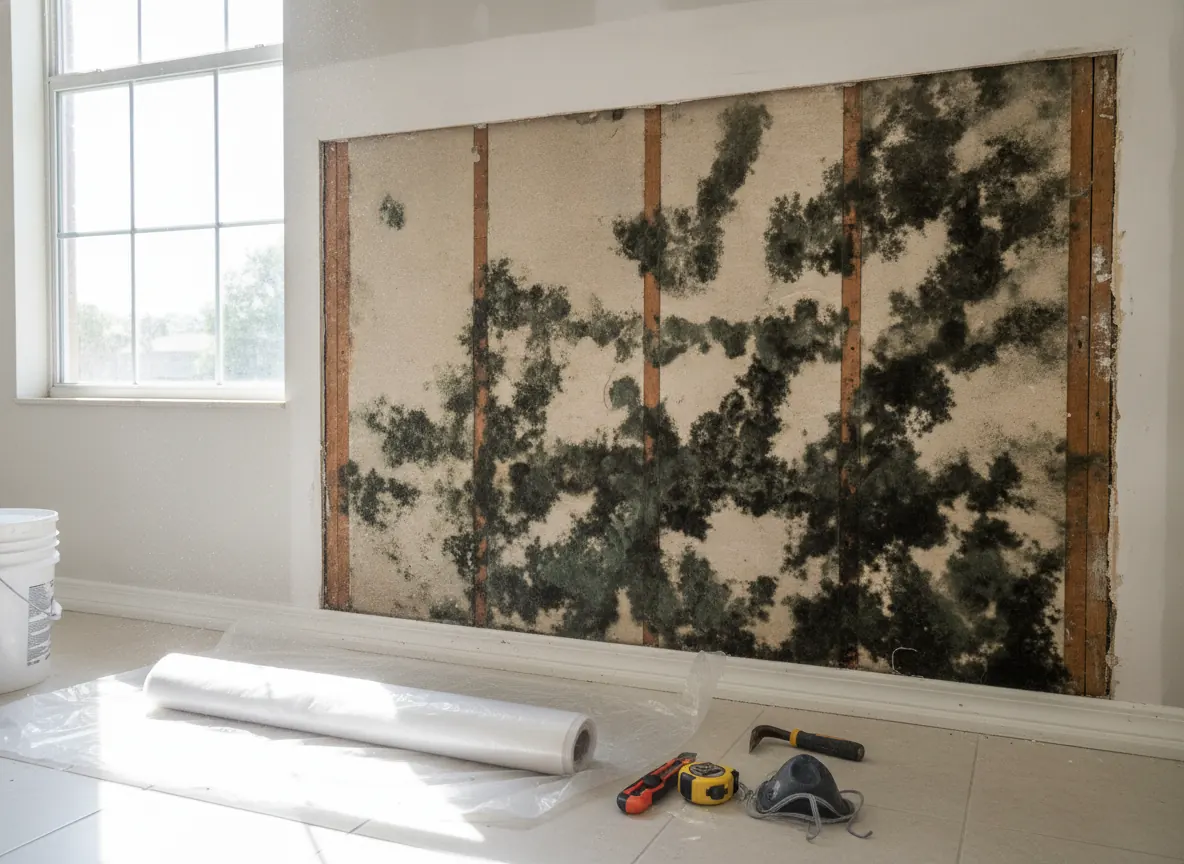
Home inspection or mold inspection?
A general home inspection looks at the whole house: roof, structure, plumbing, electrical, the AC system and more. Florida licenses home inspectors under a separate part of the same chapter of law that covers mold. A home inspector may note water stains, visible growth or a musty smell, but that is different from a mold assessment. Ask your home inspector what their report covers on mold.
Florida law defines a mold assessment as a process performed by a mold assessor that includes physical sampling and the evaluation of data to identify the origin, identity, location and extent of mold growth over 10 square feet (s. 468.8411). Florida licenses mold assessors and mold remediators through the Department of Business and Professional Regulation (DBPR) under Chapter 468, Part XVI. Before you hire, look up the company's license at myfloridalicense.com (search by name or license number).
When a mold inspection helps
EPA says that in most cases, if visible mold growth is present, sampling is unnecessary. In a purchase, though, you are trying to learn about a house you don't own yet, and hidden mold is the expensive kind. A mold inspection is worth considering when you see any of these:
- A musty smell, especially one that gets stronger when the AC runs or after the house has been closed.
- Water stains on ceilings, under sinks, around windows or near the air handler.
- Signs of storm repairs: new drywall or baseboards along the lower walls, fresh paint in just one room, or new flooring in a home that is otherwise older.
- A home or condo that sat closed through a summer with the AC off or set high.
- A condo with a history of leaks from above or from shared pipes.
- A manufactured home in an area that flooded, where moisture can reach the underside of the floor.
- The home inspector recommends further evaluation for moisture or mold.
What the local housing stock tells you
Age alone doesn't mean mold, but older homes have had more years of roof, plumbing and AC wear. The figures below are from the American Community Survey (2020–2024) unless noted.
| Place | Median year built | Worth knowing |
|---|---|---|
| Sarasota (city) | 1976 | About 58% of homes built before 1980 |
| Bradenton | 1983 | About 44% of households rent |
| Lakewood Ranch | 2014 | About 90% built in 2000 or later |
| North Port | 2005 | About 81% single-family detached |
| Venice | 1986 | About 12% mobile homes |
| Siesta Key | 1976 | About 45% of units in buildings with 20 or more units |
| Longboat Key | 1980 | About 46% of units in buildings with 20 or more units |
| Sarasota County | 1988 | About 8% mobile homes |
| Manatee County | 1991 | About 14% mobile homes |
Newer homes have their own moisture questions, mostly about AC performance and condensation, and that doesn't mean they are defective. The AC and HVAC mold page covers what to look for around the air handler and ducts.
Ask about storm history and flood zones
Recent storms reached different parts of this area in different ways. Hurricane Ian (September 28, 2022) brought record river flooding along the Myakka River and heavy rain in North Port and Venice. Hurricane Debby dropped 16.98 inches at one Sarasota gauge in August 2024. Hurricane Helene's surge hit Longboat Key and Anna Maria Island in late September 2024, and Hurricane Milton made landfall on Siesta Key as a Category 3 on October 9, 2024.
Ask the seller in writing whether the home took on water, what was repaired, who did the work, whether permits were pulled, and whether an insurance claim was filed. Ask whether any mold work was done and whether a clearance test was performed afterward. New flood maps for the City of Sarasota and Sarasota County took effect March 27, 2024, so check the current flood zone too; it affects insurance and any future repair permits.
What a mold inspection report should cover
Reports vary, but a useful one should help you answer four questions from Florida's own definition: where is the mold, what kind, how much, and where is the moisture coming from? Expect:
- A description of each area checked, with photos.
- Moisture readings or observations for walls, ceilings and the AC area.
- Sample locations, including any outdoor comparison sample, and the lab results.
- The likely source of moisture for each problem area.
- Recommendations, such as repairs, further investigation or remediation.
An assessment contract doesn't have to include repair-cost estimates (s. 468.8422), so plan to get remediation quotes separately if mold is found. Ask the assessor how long lab results take, and schedule early so the report arrives before your inspection period ends. Your real estate agent or attorney can explain the deadlines in your contract.
Keep testing and removal separate. In Florida, a company that does the mold assessment generally can't also do the remediation on the same structure within 12 months, and vice versa (s. 468.8419). If the seller offers a report from a company that also proposes to do the removal, ask how that fits the rule, and consider hiring your own assessor.
What a mold inspection costs
| Item | Typical range | Source |
|---|---|---|
| Mold inspection / testing | $450–$800 (avg ≈ $500); inspection only $300–$600 | Fixr, Jan 2025 |
| Air test · surface (tape/swab) test | $500–$700 · $150–$200 | Fixr, Jan 2025 |
| Mold remediation, typical job | $1,500–$9,000 (avg ≈ $3,500) | Fixr, Aug 2025 |
The mold remediation cost page has the full table and a calculator, and the mold inspection and testing page explains air and surface samples in more detail.
If the report finds mold
Finding mold doesn't have to end a purchase. Common next steps include asking the seller to fix the moisture source and have a licensed remediator do the work, with a clearance test by an independent assessor; negotiating the price based on written remediation quotes; or walking away if the problem is large and the contract allows it. Your agent or attorney can tell you which options your contract allows.
Talk to an insurance agent before closing. Many Florida homeowners policies limit mold coverage, often to $10,000, a limit that became standard after state-approved endorsements in 2002 and 2003. Check the declarations page of the policy you plan to buy. For a condo, read the declaration and ask the association in writing about past leaks and who handles repairs; the condo mold page explains the usual split. The mold removal page covers what a remediation job usually involves.
On health, EPA and CDC say mold can cause allergic and irritant reactions in some people, and that people with asthma, allergies or weakened immune systems may be more sensitive. If you or someone in your home has symptoms, talk to a doctor.
Questions to ask a mold assessor
- What is your DBPR license number? (Check it at myfloridalicense.com.)
- Do you carry the general liability and errors and omissions insurance Florida requires (at least $1 million, s. 468.8421)?
- Will you give me a written contract listing the samples, the lab and the report (s. 468.8422)?
- Does your company, or one it owns, do remediation? If so, it generally can't remediate this home within 12 months.
- When will I have the written report?
Sarasota Mold Experts is a free quote service in Sarasota, FL, not a mold company. Describe your situation any time, and independent local companies reply on their own schedules. Some companies pay to receive requests, and none of them is affiliated with this site. Request a free quote or call (941) 393-1454.
Frequently asked questions
Should I get a mold inspection when buying a house in Florida?
It is optional, but worth considering if you notice a musty smell, water stains, signs of storm repairs, a home that sat closed through a summer, or a condo with past leaks. A general home inspection may note visible mold, while a mold assessment by a DBPR-licensed assessor adds sampling and a written evaluation.
Is a home inspection the same as a mold inspection?
No. A home inspection covers the whole house and may note visible mold or water stains. A Florida mold assessment, as defined in s. 468.8411, includes physical sampling and an evaluation of where the mold is, what it is, how much there is and where it came from. Ask each inspector what their report covers.
How much does a mold inspection cost for a home purchase?
Fixr's January 2025 national estimates put a mold inspection with testing at about $450 to $800, averaging about $500, with inspection only at $300 to $600. More samples, a larger home or opening walls raise the price. Sarasota-area quotes vary, so ask for a written price before scheduling.
Can the seller's mold company also test the home after fixing it?
Generally not. In Florida, a company that remediated a structure generally can't also do the mold assessment on it within 12 months, and vice versa (s. 468.8419). For a clearance test, ask for an independent licensed assessor, ideally one you choose.